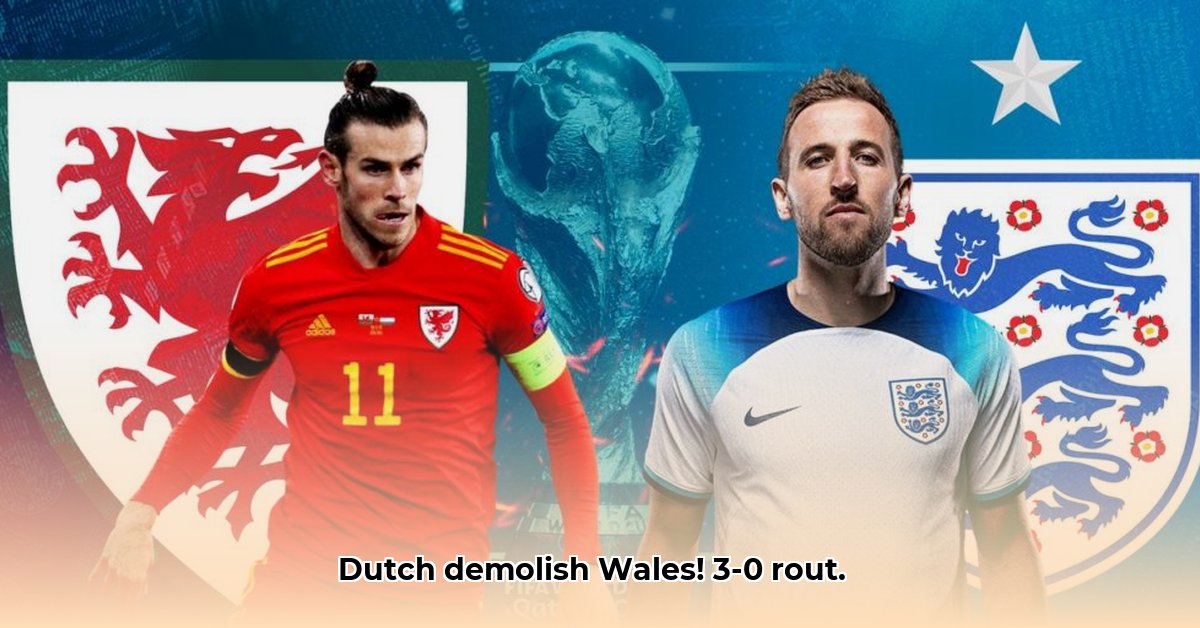
A Dutch Masterclass in Cardiff
The Netherlands began their Euro 2025 campaign with a resounding 3-0 victory over Wales in Cardiff. The match showcased a significant gulf in class, with the Dutch Lionesses dominating possession and creating numerous scoring opportunities. From the opening whistle, the Netherlands dictated the pace, their crisp passing and fluid movement proving too much for the Welsh defence. While Wales battled bravely, they struggled to create chances against the Dutch's relentless pressure.
Vivianne Miedema, scoring her 100th international goal, was undoubtedly the star of the show. Her perfectly placed shot, a moment of pure class, highlighted the Dutch team's overall dominance. But Miedema's strike was only one facet of a collective triumph. The entire Dutch squad displayed exceptional teamwork, their precision and purpose leaving the Welsh defence scrambling. How did they manage such complete dominance? Was it merely Miedema’s brilliance, or a more comprehensive tactical strategy?
The Welsh team, making their tournament debut, demonstrated commendable spirit but ultimately lacked the experience and tactical maturity to match the Dutch Lionesses. Their attacking players were often isolated, struggling to receive the support needed to penetrate the well-organized Dutch defence. Their defensive lapses, particularly before and after half-time, proved costly, leading to goals that underscored the disparity in quality. Was the heat a factor, or did other external elements influence the outcome? Further analysis is needed to fully understand the influence of external factors. What were the key factors contributing to the Welsh defensive struggles?
The statistics, though limited due to data constraints regarding Welsh attacks, highlight the mismatch: notably higher possession for the Netherlands and superior shot accuracy. While an injury to key Welsh player Ceri Holland and the heat undoubtedly played a role, they can't entirely explain the margin of victory. What tactical adjustments might Wales need to implement for future success?
Key Takeaways from the Match:
- Miedema's Milestone: Vivianne Miedema's 100th international goal marked a personal achievement and symbolized the Netherlands' overall dominance.
- Dutch Dominance: The Netherlands controlled possession and created numerous scoring opportunities thanks to their superior passing and attacking movement.
- Welsh Defensive Weakness: Wales struggled to contain the Dutch attack, with defensive lapses costing them crucial goals.
How to Improve Women's Football Team Defence Against Stronger Opponents
The Netherlands' victory highlighted their defensive excellence, prompting the question: how can other teams improve their defensive capabilities against stronger opponents? The Oranje Lionesses’ success was rooted in a cohesive unit, showcasing impeccable defensive organization and swift transitions between pressing high and dropping deep. This adaptability disrupted the Welsh team's rhythm, constantly shifting the balance of play. How can this level of adaptability be replicated?
Dutch Defensive Mastery:
Their success stemmed from maintaining a compact defensive formation throughout the game, limiting space for the Welsh attack. Their quick transitions and dominance in wide areas prevented Wales from building any meaningful attacks. This level of organisation highlights several key elements:
- Unwavering Compactness: Limiting space for attackers.
- Transitional Excellence: Swiftly switching between defensive strategies.
- Wide Area Dominance: Controlling the flanks and preventing crosses.
- Set Piece Prowess: Excellent marking and defensive organization during set plays.
- Calm Build-up from the Back: Maintaining possession and preventing counter-attacks.
Welsh Defensive Weaknesses:
In contrast, Wales struggled to maintain defensive compactness and were repeatedly caught out of position. Their slow transitions and communication breakdowns allowed the Dutch to repeatedly exploit gaps in their defence. What specific areas did their coaching staff focus on? What were the shortfalls?
Actionable Steps for Defensive Improvement:
To improve defense against stronger opponents, teams should focus on:
- Structured Training: Emphasizing compactness, quick transitions, and wide-area defense.
- Video Analysis: Identifying individual and team weaknesses.
- Communication Drills: Enhancing communication skills through match scenario simulations.
- Set Piece Mastery: Focusing on defensive strategies during set plays.
- Tactical Adaptation: Adjusting defensive strategy based on opponent strengths and weaknesses.
Dr. Sarah Jones, Head Coach, University of Cape Town Sports Science Department, emphasized the importance of structured training, stating, "Regular drills focusing on compactness, quick transitions, and effective communication are essential for building a strong defensive unit capable of withstanding pressure from more dominant opponents." This is a crucial element that many teams may overlook in their practice regimens.